
Work with us to
- plan, sustain, & preserve collaborative digital projects
- identify suitable methods & platforms
- build & analyze collections of humanistic data
- address ethical concerns about accessibility, collaboration, technology, & impact
Get started | Schedule a consult | Subscribe to our Newsletter | Attend a workshop | Learn about projects
Upcoming Workshops
Humanities Research and AI
How can humanities scholars and students engage with and/or critique AI responsibly and effectively in their research?
This workshop will review basic concepts related generative artificial intelligence; highlight major policy and ethical concerns; and provide guidance grounded in existing policies with regard to AI use across research practices—from initial research to analysis, publication, and peer review. Discussion and an activity will offer participants space to investigate the possibilities and limitations for AI in their work.
By the end of this workshop, participants will be able to
- explain in general terms what generative AI is;
- describe major concerns for its integration into humanities scholarship;
- identify opportunities and challenges of applying and critique AI in research.
This workshop will be facilitated by Hannah Jacobs, Digital Humanities Consultant with Duke Libraries.
Priority will be given to faculty & graduate students in the arts, humanities, and interpretive social sciences.
Location: Murthy Digital Studio (Rm 121), Bostock Library, West Campus
Participation: General discussion, structured activity, and time for questions.
Arts & Humanities Archives as Data
Are you looking for ways to apply your research question to a collection of newspapers, photographs, letters, or other archival materials? Have you ever thought a spreadsheet or database might help your research?
In this workshop, participants will learn how to organize archival data around their research question(s) by drawing on data feminism* principles to address ethical concerns, such as recognizing and addressing source biases, creating an intentional data collection and structuring practice, and making labor and decision-making in data collection and structuring visible. We will also attend to common humanities data challenges, including consistency, uncertainty, ambiguity, and scale. We will consider several examples and will collaborate in a hands-on exercise creating a data structure for archival sources. Participants will also learn how to match data structures to visualization types.
By the end of this workshop, participants will be able to
- identify when gathering data may be an appropriate way to address a research question;
- articulate when they need a spreadsheet as opposed to a database; and
- structure archival data around a research question using data feminism principles and addressing common humanities data challenges.
Participants will have the opportunity to join a follow up session in which they can bring their own data for workshopping based on the principles learned in this session:
- Tuesday, November 17th (10:00am-11:30am) - Music Library Seminar Room, Biddle Music Building, East Campus
- Thursday, November 19th (2:00-3:30pm) - Murthy Digital Studio (Rm 121), Bostock Library, West Campus
*Data feminism scholarship we will be drawing from includes the Feminist Data Manifest-No and Data Feminism.
Priority will be given to faculty & graduate students in the arts, humanities, and interpretive social sciences.
This workshop will be facilitated by Hannah Jacobs, Digital Humanities Consultant with Duke Libraries.
Location: Music Library Seminar Room, Biddle Music Building, East Campus
Participation: General discussion, structured activity, and time for questions.
Arts & Humanities Archives as Data
Are you looking for ways to apply your research question to a collection of newspapers, photographs, letters, or other archival materials? Have you ever thought a spreadsheet or database might help your research?
In this workshop, participants will learn how to organize archival data around their research question(s) by drawing on data feminism* principles to address ethical concerns, such as recognizing and addressing source biases, creating an intentional data collection and structuring practice, and making labor and decision-making in data collection and structuring visible. We will also attend to common humanities data challenges, including consistency, uncertainty, ambiguity, and scale. We will consider several examples and will collaborate in a hands-on exercise creating a data structure for archival sources. Participants will also learn how to match data structures to visualization types.
By the end of this workshop, participants will be able to
- identify when gathering data may be an appropriate way to address a research question;
- articulate when they need a spreadsheet as opposed to a database; and
- structure archival data around a research question using data feminism principles and addressing common humanities data challenges.
Participants will have the opportunity to join a follow up session in which they can bring their own data for workshopping based on the principles learned in this session:
- Tuesday, November 17th (10:00am-11:30am) - Music Library Seminar Room, Biddle Music Building, East Campus
- Thursday, November 19th (2:00-3:30pm) - Murthy Digital Studio (Rm 121), Bostock Library, West Campus
*Data feminism scholarship we will be drawing from includes the Data Feminist Manfist-No and Data Feminism.
Priority will be given to faculty & graduate students in the arts, humanities, and interpretive social sciences.
This workshop will be facilitated by Hannah Jacobs, Digital Humanities Consultant with Duke Libraries.
Location: Murthy Digital Studio (Rm 121), Bostock Library, West Campus
Participation: General discussion, structured activity, and time for questions.
About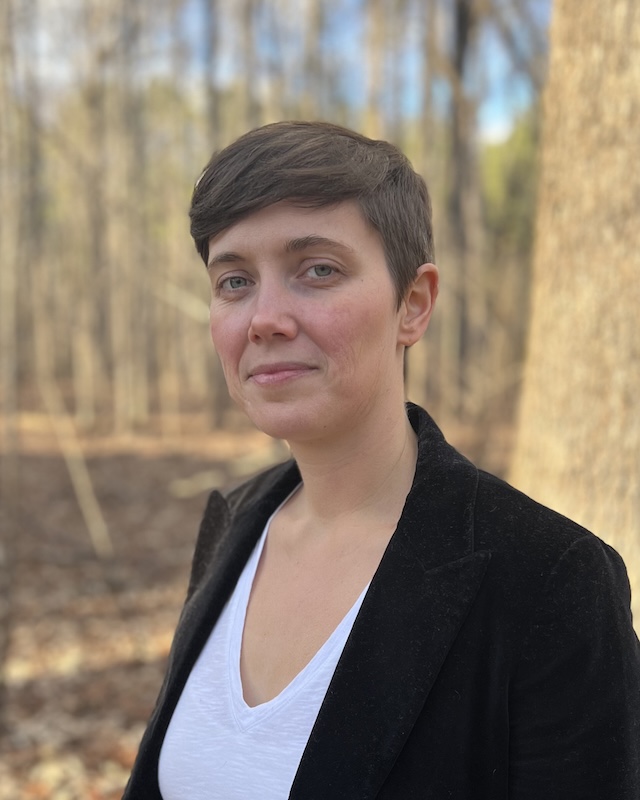
Hannah L. Jacobs is Duke Libraries’ Digital Humanities Consultant. She consults and collaborates with staff, students, and faculty on digital humanities topics broadly. She also connects humanities researchers with and advocates for technological resources on campus. She offers consultations on digital project planning and building, as well as best practices for a wide range of technologically-engaged research. She also offers instruction in a broad range of digital humanities topics and can work with researchers, instructors, and units to design area-specific workshops.